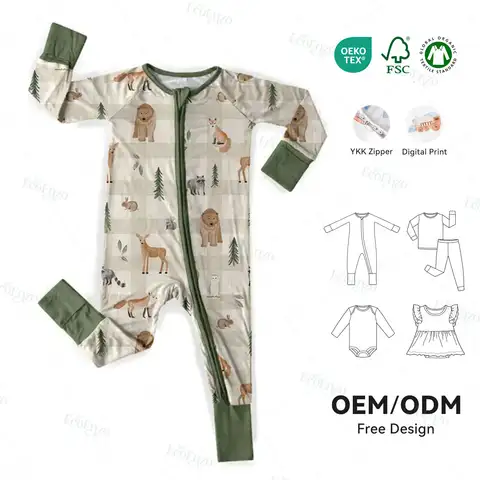
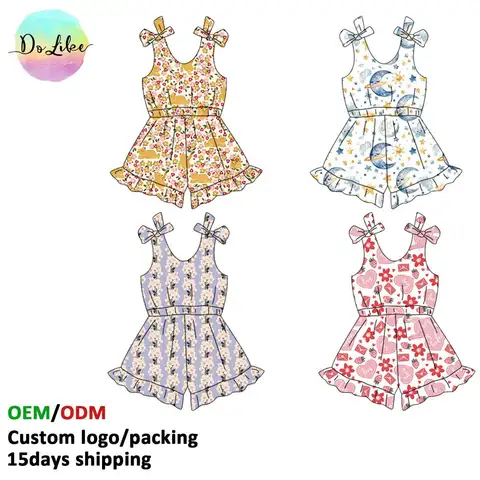
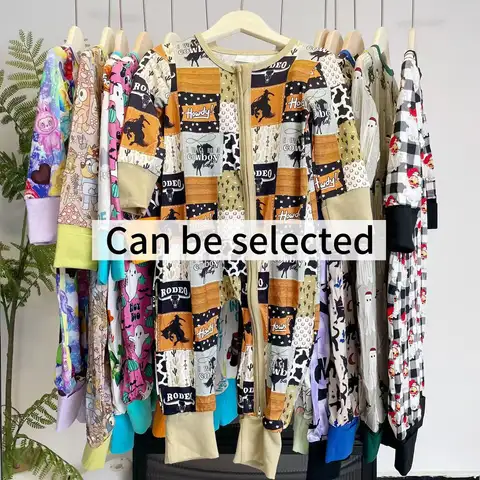
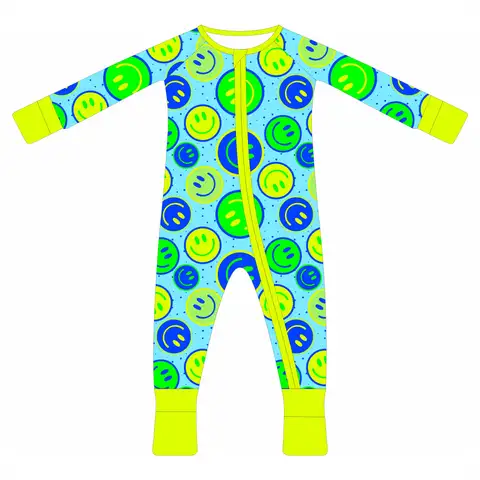
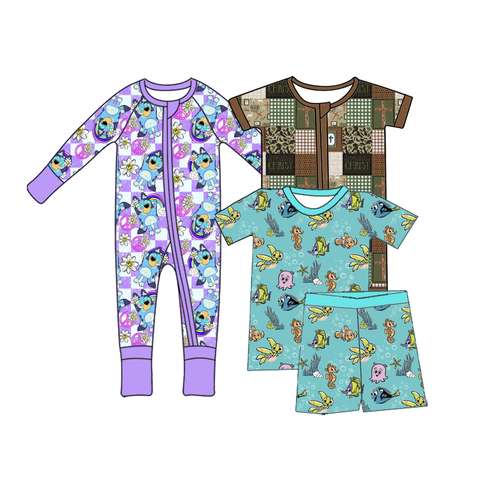
Custom Organic Bamboo Digital Print Natural Bamboo Newborn Footie Clothes Set Baby Onesie Rompers Baby Pajamas Top Factory
Ensuring Seam Strength in Custom Organic Bamboo Baby Clothing
Introduction
Seam strength is critical when manufacturing baby clothing. The delicate nature of newborn skin demands garments that are not only soft and breathable but also durable enough to withstand stretching, frequent washing, and active movement. Custom organic bamboo digital print baby footie clothes, onesies, and pajamas require special attention in the production process to ensure high-quality seams.

Material Selection
Organic bamboo fabric is known for its softness, sustainability, and moisture-wicking properties. While it is ideal for baby clothing, bamboo fibers can pose challenges during stitching due to their smooth, slippery nature. To ensure strong seams, select bamboo fabrics with the right weave and weight. Fabrics with a tighter knit or weave offer better durability and hold up well under tension. Avoid overly lightweight bamboo fabric for footie clothes and onesies unless using reinforcement techniques in stitching.
Thread Considerations
The type of thread plays a significant role in seam strength. For organic bamboo baby clothing, strong yet flexible threads such as polyester or polycore cotton threads perform best. These threads offer the necessary elasticity to stretch along with the bamboo fabric while maintaining structural integrity. Using organic cotton threads ensures alignment with sustainability goals but may require additional seam reinforcements for high-stress areas.
Stitch Patterns
The stitch pattern significantly impacts seam strength in baby garments. For bamboo onesies and rompers, prioritize stretch-friendly stitches like overlock (serger) or coverstitch for more durability. These stitches create a tight bond between fabric layers and allow for flexibility without breaking under stress. Double-stitched seams work effectively throughout the garment, especially in areas prone to wear, such as leg openings, snaps, and armholes. Reinforce seams at stress points by incorporating bar tacks or zigzag stitching to prevent unraveling.
Equipment and Tension Adjustment
Choosing the right sewing equipment ensures consistent seam strength. High-quality sewing machines equipped with walking foot mechanisms prevent fabric slippage during stitching, which is crucial for bamboo fabric. Adjust machine tension settings carefully to cater to the bamboo fabric’s thickness and elasticity. Excessive tension may cause puckering, while insufficient tension results in loose seams. Regularly test settings before starting full production runs.
Seam Placement and Comfort
Seam placement impacts both garment durability and wearer comfort. For baby pajamas, prioritize flatlock seams to minimize irritation against sensitive skin. Strategic placement of seams away from high-friction areas reduces wear and tear while ensuring the garment stays comfortable. Design elements such as raglan sleeves or gussets distribute stress more evenly, enhancing seam longevity.
Quality Control
Implement rigorous quality control measures to detect seam-related issues early. Inspect all garments for uneven stitching, skipped stitches, or loose seams. Stretch seams during inspection to verify strength and check for signs of snapping or unraveling. Establish testing guidelines that mimic real-life usage, such as repeated washing and stretching, to assess seam durability. Train production staff to understand seam quality standards, ensuring consistency throughout your product line.
Maintenance and Production Efficiency
Maintain sewing equipment meticulously to ensure the production line operates at peak efficiency. Regularly replace needles and clean machine components to prevent skipped stitches or thread breakage. Use specialty bamboo fabric needles to minimize the risk of damage during stitching. Optimize production workflows to balance seam strength with output speed without compromising quality. Clear guidelines for material handling reduce waste and ensure precision.
Conclusion
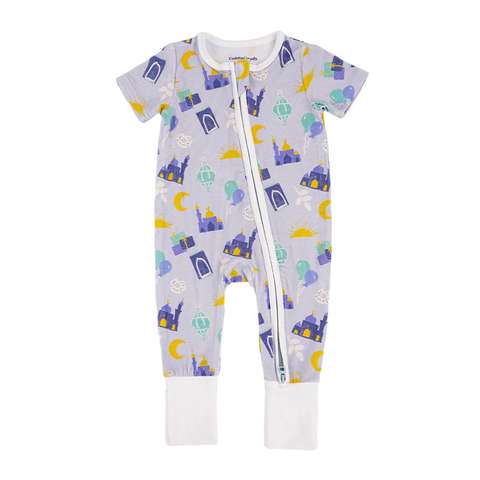
Seam strength is an essential focus point when manufacturing custom organic bamboo baby clothing. Address material characteristics, thread type, stitching methods, equipment settings, and quality control measures with precision. Products such as baby onesies, rompers, and footie clothes must meet safety and comfort standards while retaining durability under frequent use. Apply practical seam-strengthening techniques to deliver high-performance garments tailored to the unique needs of babies and their families.